Preparing Your Competition Costume: Dos and Don'ts
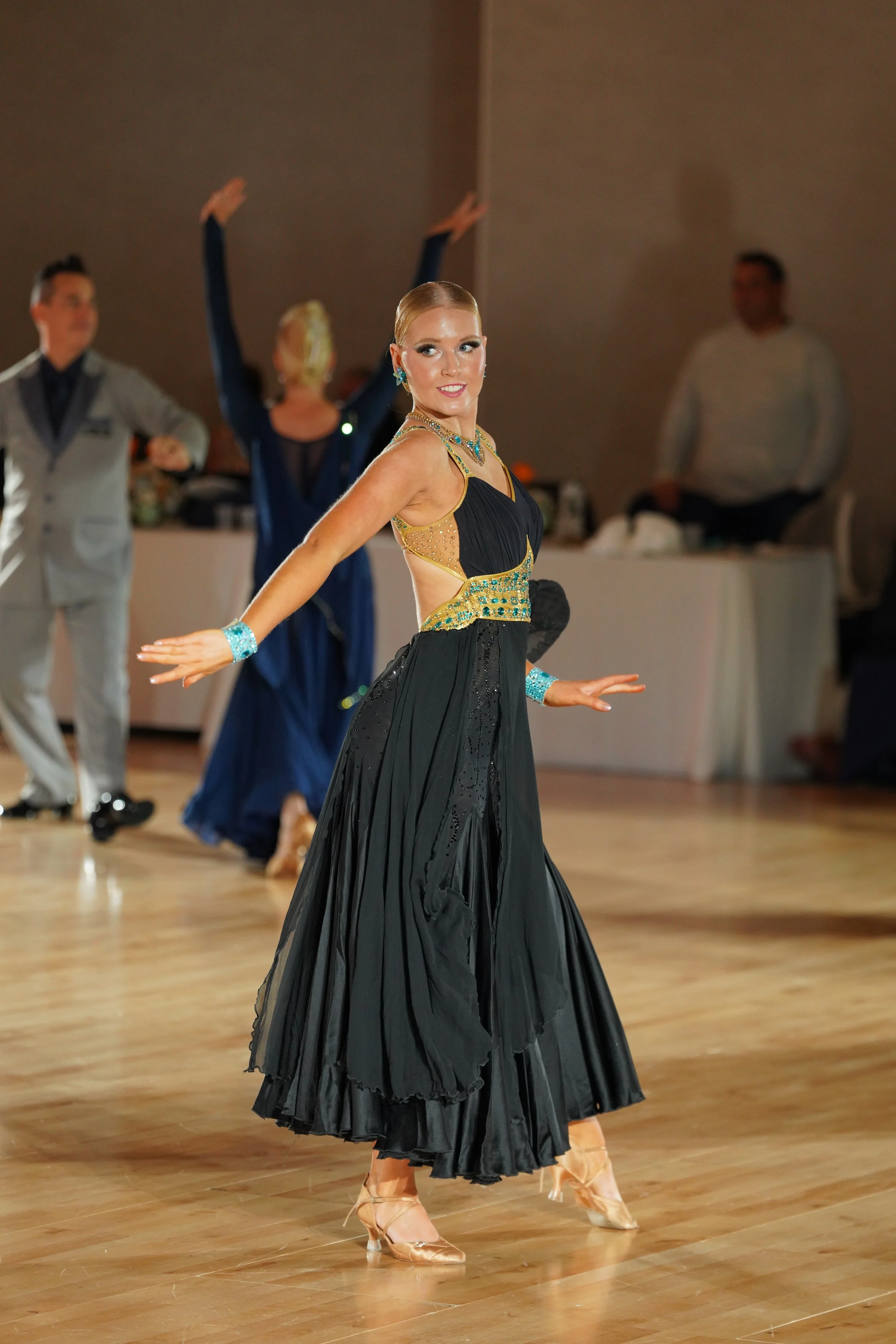
Image credit: Dance Production House
You've registered for Commonwealth Classic, you've been practicing your routines, and now comes one of the most exciting (and sometimes stressful) parts of competition prep: choosing your costume. What you wear on the competition floor matters—not just for judges, but for your own confidence and performance quality.
Let's demystify competition costumes and help you look and feel your absolute best on the floor.
Understanding NDCA Dress Code Requirements
The National Dance Council of America (NDCA) has specific dress code guidelines for sanctioned competitions like Commonwealth Classic. These rules exist to maintain the sport's standards and ensure fairness. Here's what you need to know:
For Women - Pro/Am and Amateur
Rhythm and Latin:
Dresses, skirts, or dance pants are acceptable
Hemlines should be tasteful (minimum coverage required)
Nude undergarments should not be visible
Rhinestones and embellishments are allowed and encouraged
Latin dresses are typically shorter and more revealing than Smooth dresses
Two-piece outfits are acceptable if the midriff connection isn't excessive
Smooth and Standard:
Full-length gowns are traditional (though not strictly required)
Flowing skirts that move beautifully across the floor
More conservative than Latin/Rhythm styling
Can include modest slits for movement
Elegant, refined aesthetic
Nightclub:
More relaxed than ballroom styles
Contemporary styling acceptable
Should still look polished and intentional
General Requirements:
No visible bra straps (unless they're decorative and part of the design)
Proper undergarments that don't show through
Costumes should be secure (you'll be moving vigorously!)
For Men - Pro/Am and Amateur
Rhythm and Latin:
Dress shirt (often black) or Latin shirt
Dress pants (typically black)
Dance shoes (Latin heels or practice shoes)
Shirt can be open at the collar
More fitted, contemporary styling
Smooth and Standard:
Tailsuit, tuxedo, or formal suit
White shirt
Tie, bowtie, or cravat
Traditional, elegant styling
Smooth dance shoes
General Requirements:
Professional appearance
Well-fitted (not baggy or overly tight)
Clean and pressed
Appropriate shoes for the style
For Youth and Junior Competitors
Youth dress codes are more conservative, with additional modesty requirements. Check NDCA youth guidelines for specific rules about hemlines, embellishments, and styling.
What Works on the Competition Floor vs. Practice
Your competition costume is not your practice wear, and for good reason. Here's why:
Visual Impact from a Distance
Judges sit 20-40 feet away from you. Your costume needs to:
Create visual lines that extend and enhance your body's movement
Be visible in bright ballroom lighting (what looks garish up close often looks perfect from the judges' table)
Photograph well because you'll want those competition photos!
Catch light through rhinestones, sequins, or fabric sheen
Freedom of Movement
Competition costumes are designed for specific technical requirements:
Stretch panels in strategic places for extensions and flexibility
Weighted hems in Smooth gowns for beautiful movement
Secure closures so nothing shifts mid-dance
Built-in support eliminating the need for regular bras
Durability Under Performance Conditions
You'll sweat, stretch, and move vigorously. Competition costumes are built to handle:
Moisture (both sweat and humidity)
Repeated wear
Vigorous movement without tearing
Professional cleaning
Practice wear, even nice practice wear, isn't designed for these demands. Save your competition dress for competitions, dress rehearsals, and maybe photoshoots.
Budget-Friendly Competition Costume Options
Competition costumes can range from $150 to $5,000+. Here's how to look amazing without breaking the bank:
For Your First Competition: $200-500 Range
Option 1: Buy Pre-Owned The used competition dress market is robust and smart. Dancers outgrow dresses, change styles, or simply want fresh looks. You can find barely-worn designer dresses for a fraction of retail price.
Where to shop:
DanceSportClassifieds.com
Facebook groups: "Ballroom Dance Costumes for Sale"
Studio bulletin boards
Competition vendor areas (they often carry consignment pieces)
Option 2: Rent Some boutiques and designers offer rental options, especially for higher-end gowns. Perfect if you're competing infrequently.
Option 3: Simple New Dress from Budget Brands Brands like DSI London, Dance America, and others offer entry-level competition dresses that look sharp and hold up well.
Option 4: Modify a Formal Dress If you're handy or know a seamstress, a formal gown from department stores can be modified for dance (add stretch panels, adjust length, add embellishments).
Mid-Range: $500-1,500
This is where you'll find excellent quality from established dancewear brands, often with customization options:
Custom sizing for perfect fit
Choice of colors
Moderate rhinestone detailing
Quality fabrics that move beautifully
Brands in this range: Chrisanne Clover, DSI London, Zhannakens, Dance America
Investment Range: $1,500+
Custom-designed, made-to-measure dresses with:
Unique designs (no one else will have your dress)
Extensive rhinestone work
Premium fabrics
Perfect fit tailored to your body
Designer name recognition
Smart Budget Strategy:
Start with one versatile dress that can work for multiple styles. A black Latin dress can often work for Rhythm. A flowing Smooth dress in a neutral color works across styles. As you compete more, build your costume wardrobe strategically.
Common Costume Mistakes to Avoid
Mistake #1: Choosing Fashion Over Function
That gorgeous dress with the dramatic off-the-shoulder sleeves? Beautiful... until you try to lift your arms into dance frame. Always, always, always try on dresses and MOVE in them before buying.
Test your dress:
Can you achieve full frame extension?
Can you do your deepest lunge?
Can you execute your fastest spins without wardrobe malfunction?
Can you breathe comfortably?
Mistake #2: Wrong Dress for Your Dance Style
Latin dresses are cut differently than Smooth gowns for good reason. The movements are different, the aesthetic is different, the technical requirements are different.
Quick guide:
Rhythm/Latin: Fitted, often shorter, emphasis on legs and hip movement, more body exposure
Smooth/Standard: Flowing, elegant, emphasis on lines and extension, more conservative
Nightclub: Contemporary, relaxed, can be more fashion-forward
Mistake #3: Ignoring Your Body Type
Not every trendy style works for every body. Choose cuts and styles that flatter YOUR shape:
Pear-shaped: Emphasize your upper body, choose full or flowing skirts
Apple-shaped: Structured bodices, avoid emphasis at waist
Athletic build: Add feminine details, choose dresses with movement
Petite: Avoid overwhelming details, choose proportional embellishments
Tall: Work those long lines! Flowing skirts and high slits look amazing
Mistake #4: Too Many Rhinestones (Yes, It's Possible)
Rhinestones catch light and create visual interest. But there's a tipping point where "sparkly" becomes "disco ball." You want judges focusing on your dancing, not being blinded by your dress.
The sweet spot: Strategic rhinestone placement that enhances lines and creates visual interest without overwhelming.
Mistake #5: Uncomfortable Shoes
Your shoes matter as much as your dress. If your feet hurt, your dancing suffers.
Shoe requirements:
Proper ballroom/Latin dance shoes (not street heels)
Heel height you can actually dance in (2.5-3 inches is standard for women)
Secure fit (no slipping or pinching)
Broken in BEFORE competition day
Extra pair as backup
Mistake #6: Forgetting the Details
Hair: Should be secured and styled appropriately (no hair in your face mid-dance)
Makeup: Stage makeup is heavier than street makeup because of lighting and distance
Tan: Many dancers use self-tanner or spray tans for definition under lights
Jewelry: Keep it simple and secure
Nails: Neat and appropriate length (not so long you can't make proper fist in frame)
Mistake #7: Buying Too Far in Advance
Bodies change. If you buy your dress six months before competition, it might not fit the same on competition day.
Ideal timing: Purchase or finalize your dress 4-8 weeks before competition. Close enough that your body won't change significantly, far enough that you have time for alterations if needed.
Where to Shop: Trusted Vendors and Boutiques
Online Retailers (Try Before You Buy)
DanceShopper.com - Wide selection, good range of prices
DanceSportUK.com - European brands, beautiful designs
DanceScape.com - Custom and ready-to-wear options
RachelAnns.com - Specializes in custom ballroom gowns
Social Marketplaces
DanceSportClassifieds.com - Largest used dress marketplace
Facebook Marketplace and ballroom dance groups
eBay - Filter for "ballroom dance dress" or "Latin dance dress"
At Competitions
Many competitions, including Commonwealth Classic, have vendors on-site selling:
New dresses
Accessories
Shoes
Rhinestones and costume jewelry
Practice wear
Pro tip: Vendor areas are great for trying before buying, and many offer competition-weekend discounts.
Local Boutiques and Designers
If you have a ballroom dancewear boutique in your area, visit! The personalized service, ability to try multiple styles, and immediate fit adjustments are invaluable.
Costume Care: Making Your Investment Last
Between Competitions
Air it out immediately after wearing (don't stuff sweaty dress in a bag)
Spot clean any makeup or sweat stains
Hang properly on a padded hanger
Store in breathable garment bag (not plastic)
Keep away from direct sunlight (prevents fading)
Long-Term Care
Professional cleaning once or twice a season (find a cleaner experienced with competition wear)
Rhinestone checks before each competition (reattach any loose stones)
Seam inspections to catch small tears before they become big problems
Proper storage in a cool, dry place
Travel Care
Invest in a good garment bag
Pack with tissue paper to maintain shape
Hang immediately upon arrival
Steam (never iron directly) to remove wrinkles
Bring a small repair kit (needle, thread, safety pins, fabric tape)
Building Your Competition Wardrobe Over Time
You don't need five different dresses for your first competition. Here's a smart approach to building a competition wardrobe:
Year 1: The Essentials
One versatile dress that works for your primary style (Rhythm OR Smooth)
Quality dance shoes for that style
Appropriate undergarments and accessories
Year 2: Expanding Options
Add a dress for your secondary style
Begin building your shoe collection
Invest in better accessories (jewelry, hair pieces)
Year 3+: Personalization
Custom or semi-custom pieces
Multiple dresses per style
Premium accessories
Signature looks that become "yours"
Final Thoughts: Confidence Is Your Best Accessory
Here's the truth: judges notice your dancing first, your costume second. A confident dancer in a simple dress outshines a nervous dancer in a $3,000 gown every single time.
Your costume should make you feel:
Confident - You look good and you know it
Comfortable - No tugging, adjusting, or worrying
Authentic - The dress suits your personality
Ready - When you put it on, you're in competition mode
When you find the right dress, you'll know. You'll move differently in it. You'll stand taller. You'll feel like a competitor.
That's the dress that's worth every penny.
See you on the floor at Commonwealth Classic 2026—and we can't wait to see what you're wearing!